
By Maritza Cosano
Alfred Uhry's Pulitzer Prize-winning play “Driving Miss Daisy” has been charming audiences since its off-Broadway premiere at the Playwrights Horizon Theater on April 25, 1987. And now, the author’s script, a deeply moving exploration of aging, friendship, and race relations in the South, has rolled into Palm Beach Dramaworks in West Palm Beach, Florida.
Fans of the 1989 Oscar-winning film adaptation, which starred Jessica Tandy and Morgan Freeman, may remember Freeman in the role that earned him widespread acclaim and marked his arrival as a leading actor in Hollywood at age 52.
But perhaps they may not recall that in 2010, “Driving Miss Daisy” had a Broadway revival at the John Goldn Theatre in New York and ran until 2011. This acclaimed production starred Vanessa Redgrave as Daisy Wertham, James Earl Jones as Hoke Coleburn, and Boyd Gaines as Boolie Wertham.
The play was extended due to high demand, which isn’t surprising given the production's widespread praise for its lead actors' performances. Similarly, Palm Beach Dramaworks is extending its show through March 1.
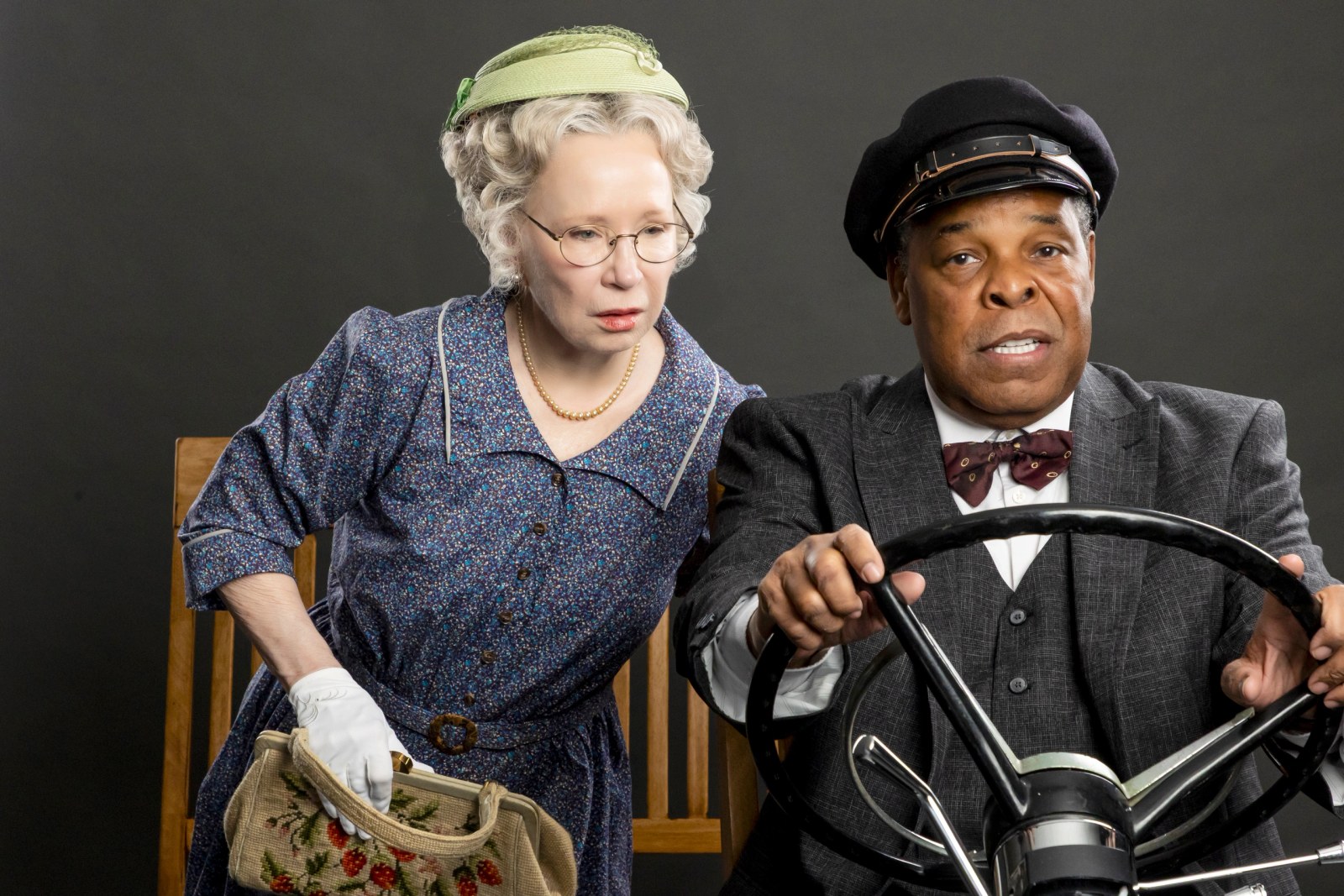
Directed by Julianne Boyd, this beloved play tells the story of Daisy Wertham [Debra Jo Rupp], a 72-year old Jewish widow, and Hoke Coleburn [Ray Anthony Thomas], a black chauffeur hired by her son, Boolie [Matthew Korinko], to drive her around the town.
Set in Atlanta, Georgia, the story spans from 1948 to 1973, charting the unlikely but enduring friendship between Daisy, a sharp-tongued woman, and Hoke, the chauffeur her son hires after she crashes her car, again.
The play is a powerful reminder that true friendship and kindness can change people. Rupp gives a brilliant performance as she portrays Daisy. From her initial icy exterior to her final softened moments with Hoke at the nursing home, Rupp’s comedic timing and facial expressions bring Daisy to life and add depth to the character.
As Hoke Coleburn, Thomas delivers a beautifully layered performance, balancing his character with humor and gentlemanly grace. His lines are some of the best in the play, as they transform his relationship with Daisy from distant to a close friendship.
Korinko’s as Daisy’s son, Boolie, adds a dose of underlying tension throughout the play, as he carefully balances wisdom, patience, and affection with a levity of control.
Though the play happens in one specific place, it is the marking of time that moves the story. Other key elements, such as aging, dignity, and race, resonate with the audience, leaving us to ponder the important things in life. Not the fancy cars, houses, or positions in society, because they come and go like wildflowers in winter. Unlike those things, friendships are not luxuries; they are a fundamental human need.
The play’s final scenes, set in the early 1970s, offer a realistic ending without tipping into the overly dramatic. Though sad, we all understand the aging process and how our lives come to an end. But friendship…. Now, that endures forever.
With a great cast and an expert crew, “Driving Miss Daisy” is a touching story about human connection at its best.
To purchase tickets or for more information about “Driving Miss Daisy,” visit Palm Beach Dramaworks. play review